


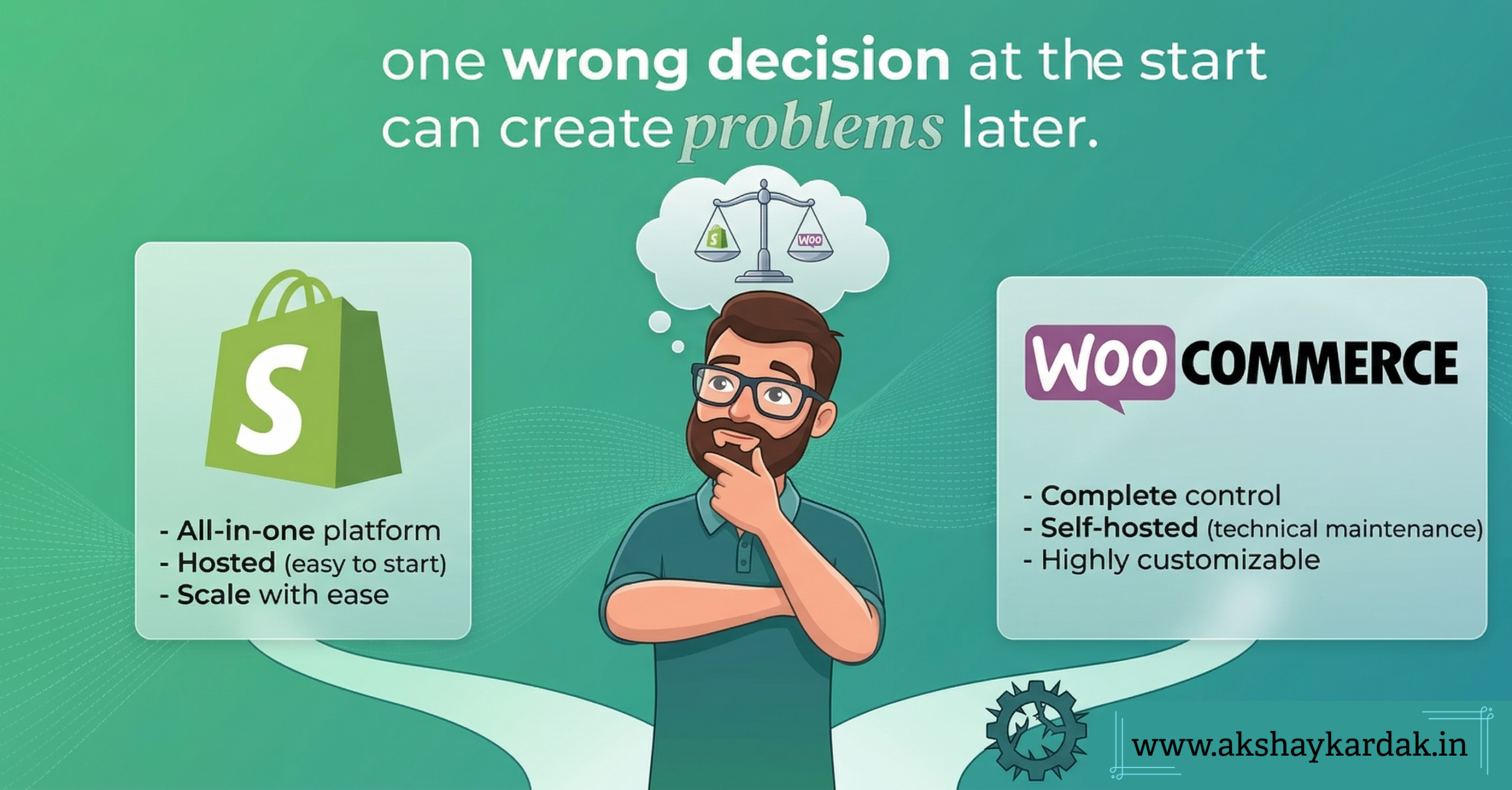
Launching an e-commerce store in 2026 is exciting, but one wrong decision at the start can create problems later. One of the biggest choices you will make is selecting the right platform for your online business. For most store owners, the debate comes down to two popular options: Shopify and WooCommerce.
Both platforms are powerful, both can help you sell online, and both have loyal communities behind them. But they are built for different kinds of businesses. The right choice depends on your goals, your budget, your technical comfort, and how much control you want over your store.
In this blog, let us break down Shopify vs WooCommerce in a simple but detailed way so you can make a smarter decision before building your e-commerce brand.
1. Beginner-Friendly vs Advanced Customization
When it comes to ease of use, Shopify is often the first choice for beginners. It is a fully hosted Software as a Service, or SaaS, platform, which means Shopify handles the technical side for you. Hosting, security, server maintenance, updates, and infrastructure are all managed by the platform. This makes it much easier for store owners to focus on products, sales, and marketing instead of dealing with technical problems.
Shopify is ideal for people who want a clean, fast, and simple way to launch their store without worrying about code or server management. It gives you a polished dashboard, ready-made tools, and a smooth setup process.
The trade-off is flexibility. Shopify gives you less control over the backend, and deeper customization often requires knowledge of Liquid, Shopify’s proprietary templating language. So while it is beginner-friendly, it may feel limited for businesses that want highly specific features or unique workflows.
WooCommerce, on the other hand, is an open-source WordPress plugin. That means it gives you far more control and flexibility. You can customize almost everything, from product pages to checkout flow, design, data structure, and user experience. If you want complete ownership and the freedom to shape your store exactly the way you want, WooCommerce is a strong option.
The downside is that it is not as plug-and-play as Shopify. You need to handle hosting, security, performance, plugin compatibility, and updates yourself. That makes it better suited for users who are comfortable with WordPress or have technical support available.
2. The Real Cost Comparison
At first glance, Shopify seems simpler to budget for because it has clear monthly plans. In 2026, Shopify pricing typically starts from the basic range and can scale up as your business grows. This predictable pricing makes it easier to plan monthly expenses, especially for new business owners.
However, the total cost can increase when you start adding premium themes, paid apps, advanced automation tools, and possible transaction fees if you do not use Shopify Payments. So while the base pricing is transparent, the real monthly spend can become higher as your business expands.
WooCommerce is often described as “free,” but that is only partly true. The plugin itself costs nothing, but building a real store with it involves additional expenses. You will usually need to pay for web hosting, domain registration, SSL certificates, premium themes, and paid extensions. In many cases, a store owner may end up spending a few hundred dollars per year or more, depending on the size and complexity of the website.
Still, WooCommerce has one important financial advantage: it does not charge platform transaction fees. That can make a big difference if you are using third-party payment gateways or managing a high-volume store.
So the cost difference is not just about the monthly plan. It is about long-term ownership, flexibility, and how much control you want over your store’s expenses.
3. Scalability for Long-Term Growth
Scalability matters a lot when you are building a business with long-term goals. A platform that works well today should still support you when traffic grows, product count increases, and your operations become more complex.
Shopify is known for effortless scaling. Its infrastructure is designed to handle traffic spikes, product growth, and busy sales periods with very little intervention from your side. Whether you are running a small store or preparing for a big sales campaign, Shopify takes care of the heavy lifting behind the scenes. That makes it a strong option for fast-growing brands, dropshipping businesses, and entrepreneurs who want a reliable system that can grow with them.
WooCommerce can also scale extremely well, but the responsibility is more on you. To handle large catalogs, heavy traffic, and advanced functionality, you need proper hosting, optimized code, smart caching, and ongoing technical maintenance. With the right setup, WooCommerce can support very large stores. Without that setup, performance issues may appear as your business grows.
This means Shopify is usually easier for rapid scaling, while WooCommerce offers deeper control if you are willing to invest in performance management.
4. Pros and Cons at a Glance
Shopify has several strong advantages. It offers a quick setup, 24/7 support, secure infrastructure, excellent checkout experience, and a large app ecosystem. It is especially useful for business owners who want to launch quickly without dealing with technical maintenance.
Its main drawbacks are the recurring subscription cost, limited backend control, and the possibility of being tied to the platform’s ecosystem as your store grows.
WooCommerce also has major strengths. It gives you full ownership of your site and data, excellent SEO opportunities through WordPress, and nearly unlimited customization. It is a great choice for brands that care deeply about content marketing, organic traffic, and custom functionality.
Its disadvantages are the technical responsibilities that come with it. You must manage hosting, security, speed optimization, and plugin conflicts. If something breaks, you or your developer need to fix it.
5. Which Platform Is Best for You?
The best platform depends on your business style.
For beginners, rapid scalers, and dropshipping businesses, Shopify is often the better choice. It is the most practical option if you want to get online quickly, keep things simple, and focus more on marketing and customer experience than technical maintenance.
For tech-savvy small businesses, freelancers, and content-driven brands, WooCommerce is often the stronger option. It is a fantastic choice if you want complete ownership, need unique features, or rely heavily on blogging, SEO, and content marketing to generate traffic.
In simple terms, Shopify is built for convenience and speed, while WooCommerce is built for freedom and customization.
6. Final Verdict
Your platform choice affects your costs, your workflow, and your future growth. Shopify gives you a smooth and managed experience. WooCommerce gives you control and flexibility. There is no universal winner, only the better fit for your specific business goals.
If you want a system that feels ready from day one, Shopify is hard to beat. If you want full control and the ability to shape every part of your store, WooCommerce is an excellent long-term choice.
The real question is not just which platform is better. The real question is: do you want to run your store like a managed retail business, or like a highly customized digital asset?
7. Conclusion
Choosing between Shopify and WooCommerce in 2026 is one of the most important decisions you will make for your e-commerce journey. Shopify is ideal for simplicity, speed, and hands-off management. WooCommerce is ideal for control, customization, and content-driven growth.
Both platforms can help you build a successful online business. The best one is the one that matches your budget, technical comfort, and long-term vision.
If you are planning to launch an online store, take time to understand your goals before choosing your platform. That one decision can shape the future of your business.
About Me
I am an expert in Shopify and WooCommerce store building.
If you are thinking about creating an online store or selling something online, I can help you with that.
From store setup to design, customization, and launching a professional e-commerce website, I provide the support you need to get started the right way.
Let’s build a store that looks great, works smoothly, and is ready to grow.